
Refurbishment of the Jack Verrall Community Gardens 2024-2026
The Jack Verrall Community Garden had been maintained by the Parish Council over many years, with tree work and mowing and some new gates in 2019. Other than this annual maintenance, a flagpole and lit Christmas tree, the gardens had not had a huge amount of attention and was under-used.
The initial idea for an extensive refurbishment of the Gardens came from Clive Ward of the Horticultural Society and was discussed by the Parish Council in June 2024.
The Vision was summed up as creating “A welcoming green space in the village for residents and visitors alike, and a venue for outdoor activities hosted by village clubs, societies, and other organisations”.
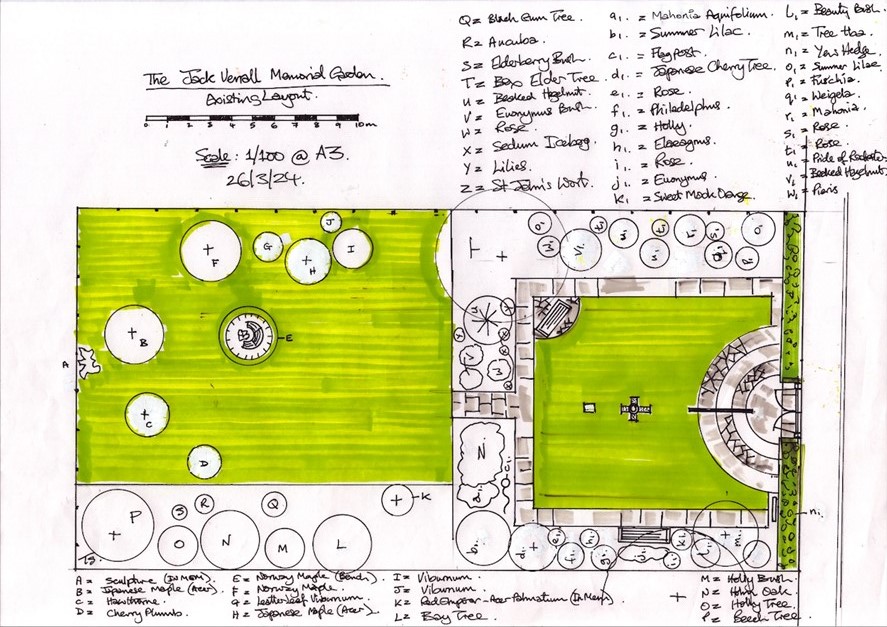
The project was divided into three stages and a comprehensive design was created by Tim Sykes, a member of the Horticultural Society and a locally based professional garden designer, giving his time for free.
The Parish Council readily agreed to support the project and allocated a total spend of up to £10k at its meeting in September 2024. A grant of £4600 was secured from Voltalia, the developer of the Bockingfold Solar Farm in Horsmonden, and the Parish Council added a further £2k initially, as costs were yet to be determined. Work would be undertaken at the most suitable times of year to ensure the best times for planting and hedge work in particular.
Cllr Andrew Dewdney and Cllr Charlotte Anderson attended site meetings to progress the ideas with Clive Ward and Tim Sykes and some time was taken to assess the best use of the area and ensure ease of long term upkeep.
Tim made a presentation to the Annual Parish Assembly held at Matfield Village Hall in the Spring of 2025. The plans for the new planting were outlined and the session ended with a call for volunteers to join in clearup and planting sessions planned for the Autumn of 2025. A similar appeal at Matfield Fete created a list of around 15 volunteers, led as throughout the project, by Tim, whose expertise and time made this project possible.
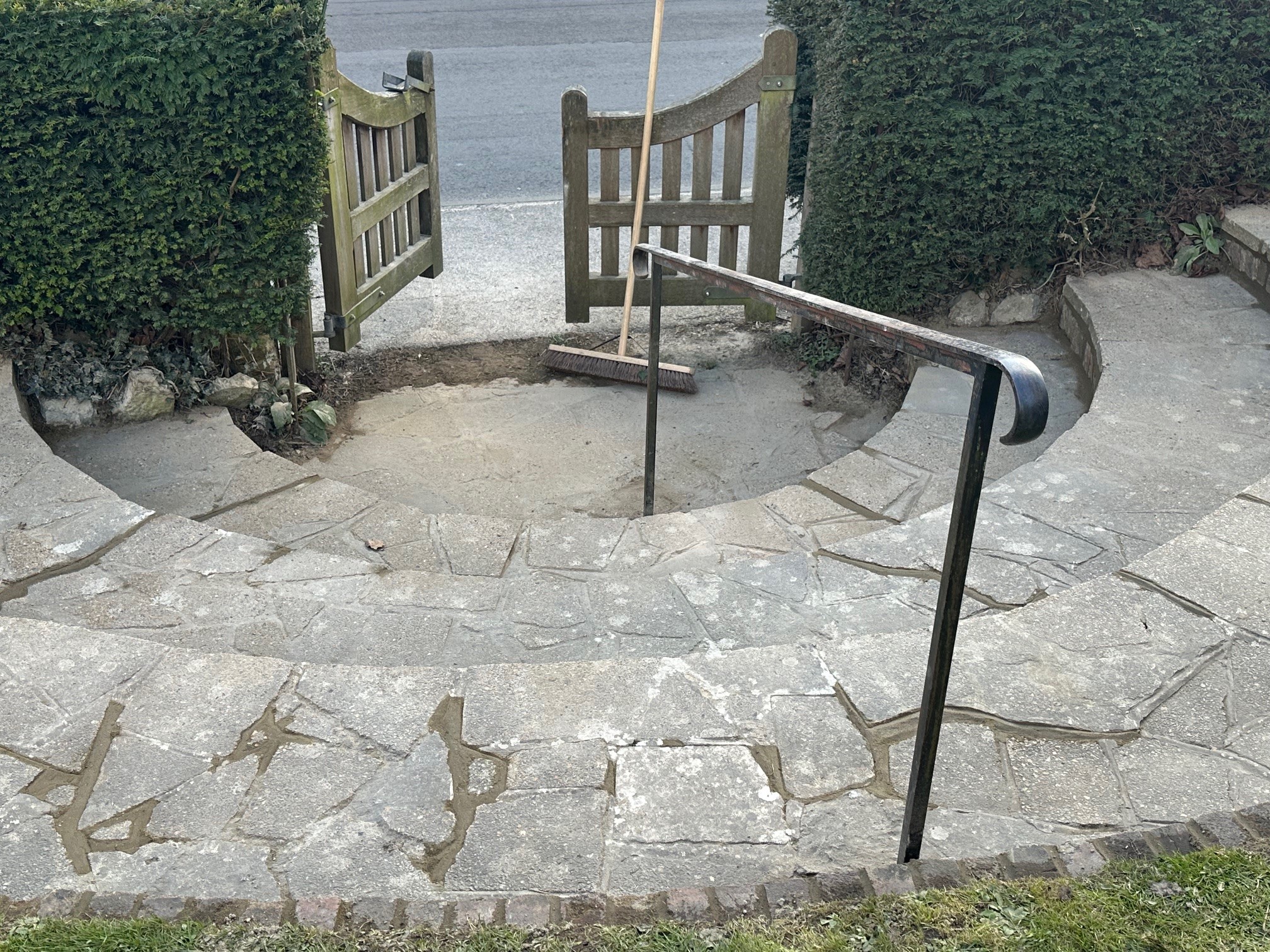
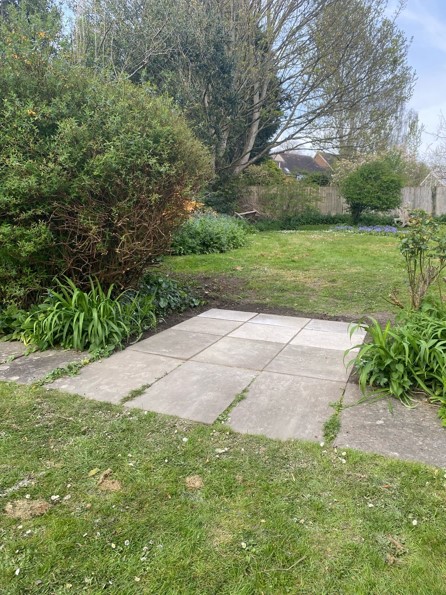
Work on the hard landscaping, paths, paving slabs, re-setting the front steps, and widening of the pathway between the lower and upper levels, and new bases for the benches was completed in the Summer of 2025.
Major tree work, lifting several of the canopies and shaping the larger bushes and lowering the roadside hedge was completed in September 2025, permission having been gained given that the gardens are in a conservation area.
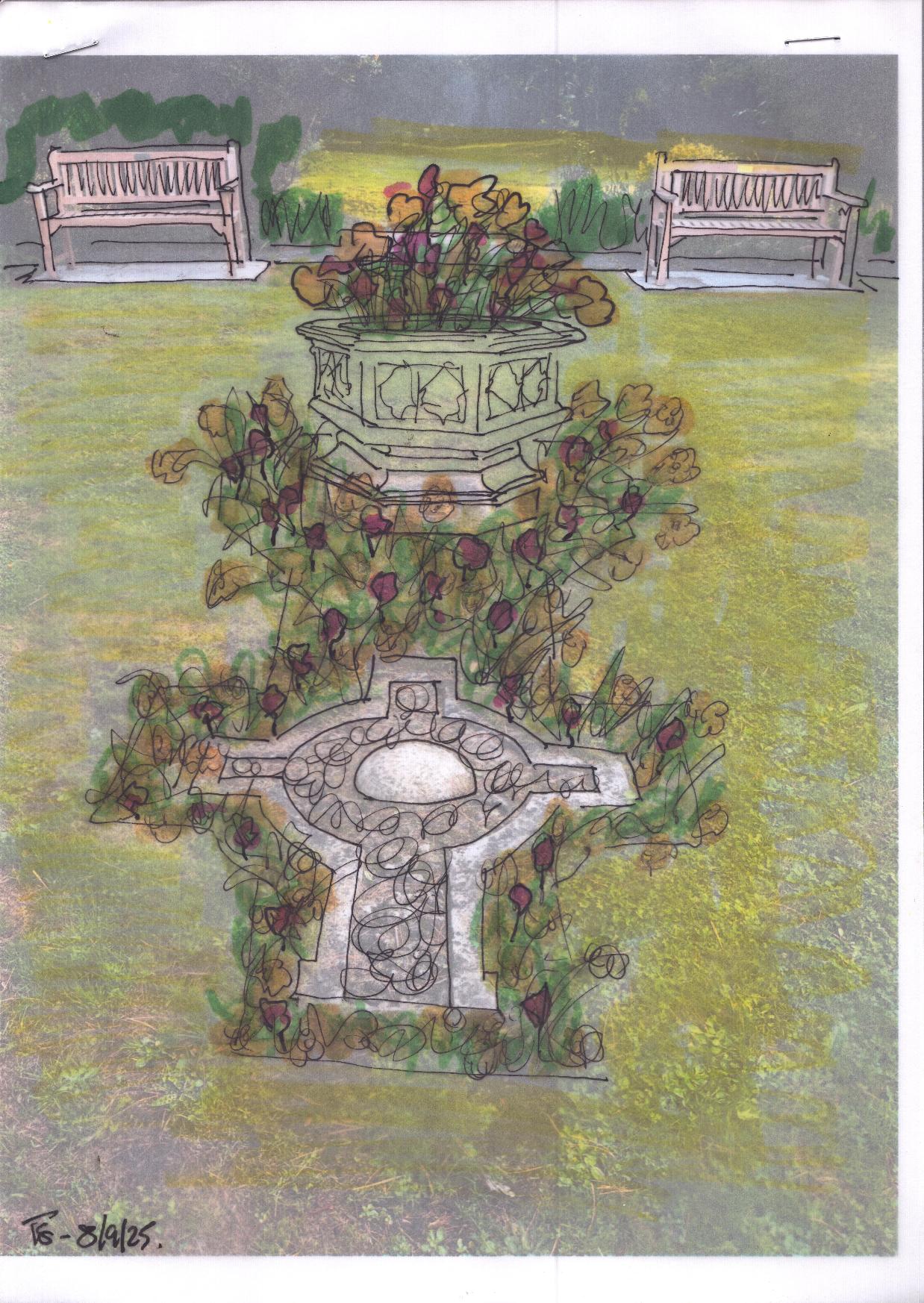
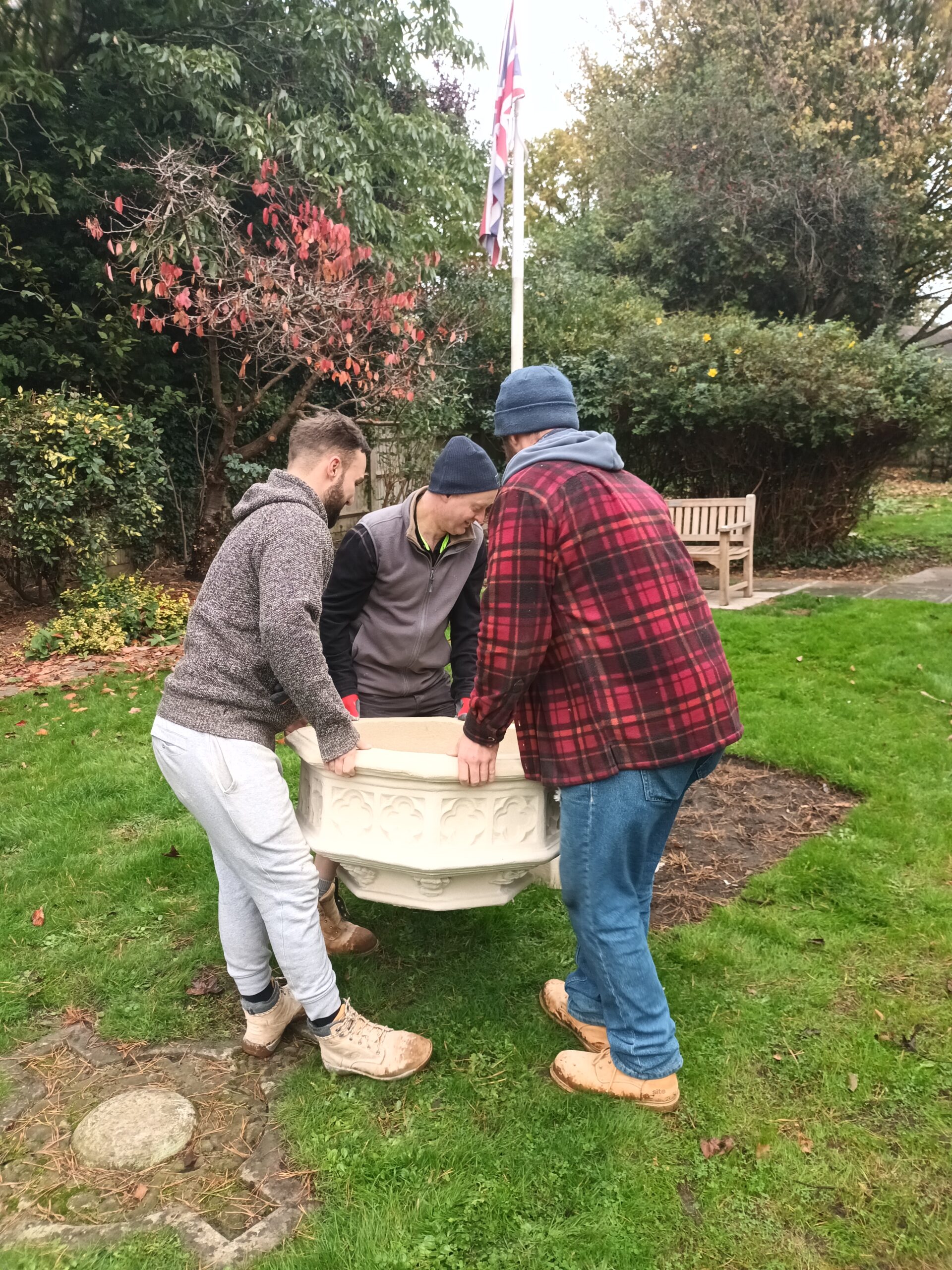
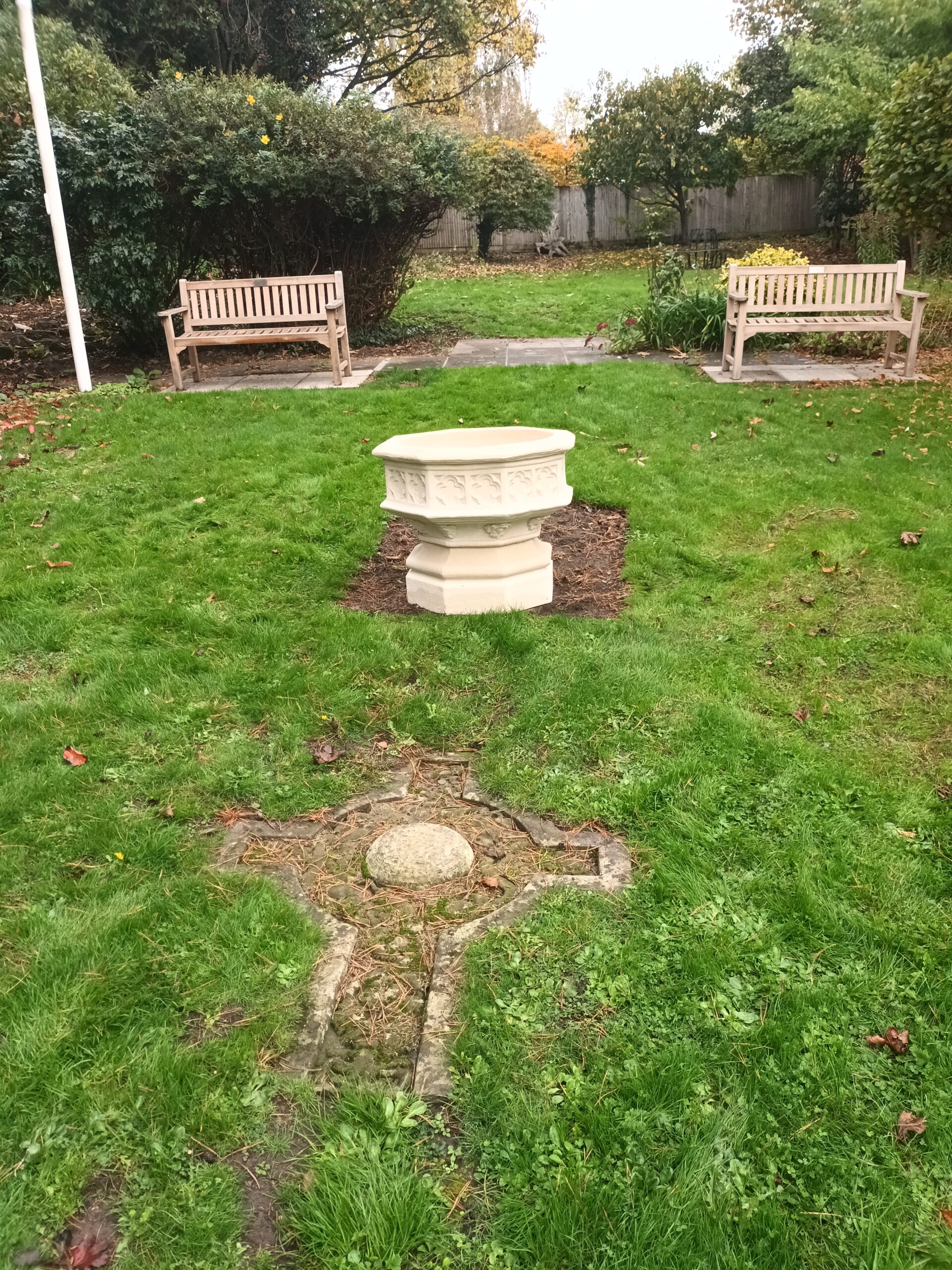
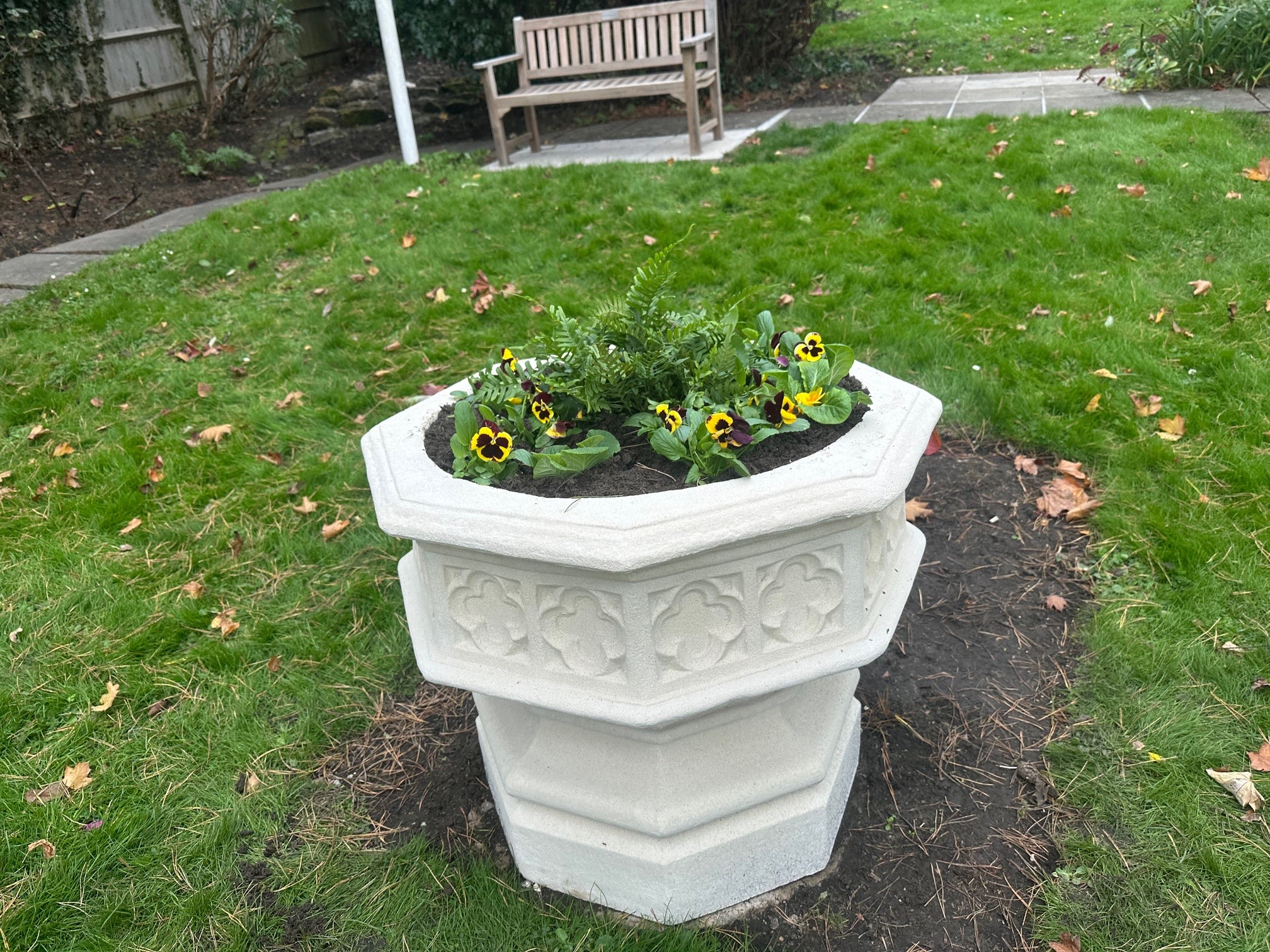
Meanwhile an approach was made to local stone masons Chilstone, who kindly donated the large sandstone octagonal “gothic” planter, which was installed in October to further enhance the view up into the Garden. It sits above the stone cross, previously the top of Brenchley War Memorial, which was embedded in the ground. Tim designed a sympathetic planting scheme and this could be maintained annually with new plants at minimal cost.
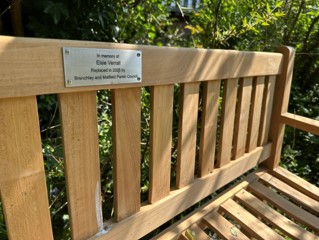
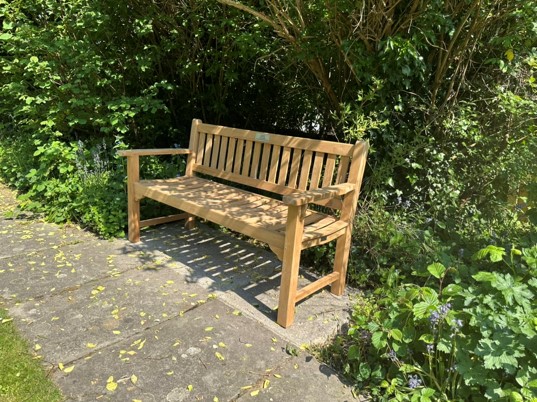
Four memorial benches, including one for Elsie Verrall, were replaced with new ones in sustainable teak with new plaques and two picnic benches were purchased. The intention is for the garden to be used more for families, walkers, cyclists, children from the school or anyone who seeks a beautiful place to sit, with the surrounding listed properties and the Little Bull Cafe as well as a handy public toilet nearby the gardens really are a huge benefit to Brenchley.
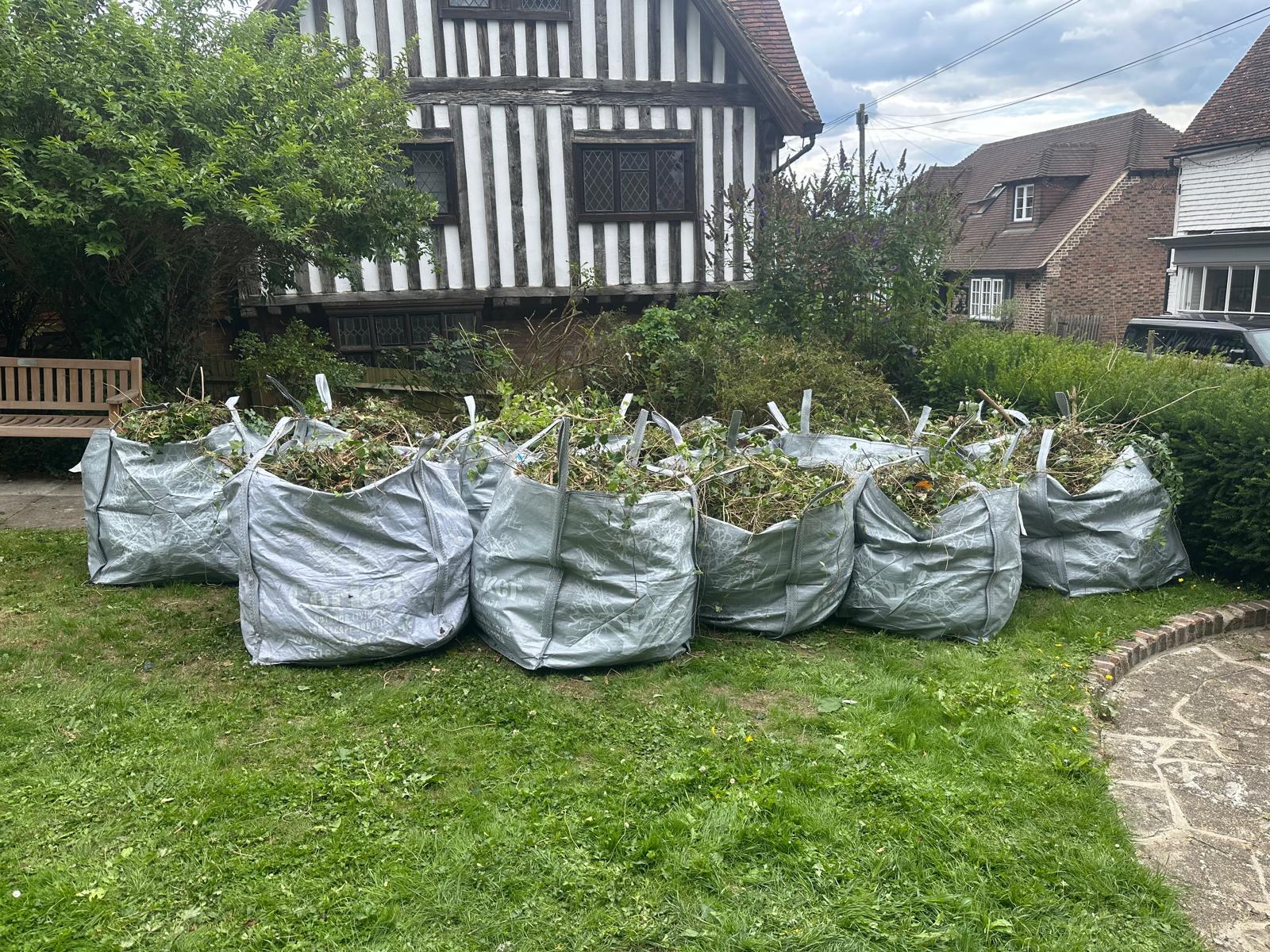
The volunteer sessions were held on 4 Saturdays in September and October 2025, up to 15 volunteers created a large amount of green waste which was kindly removed by Peter Beale, a local landowner.
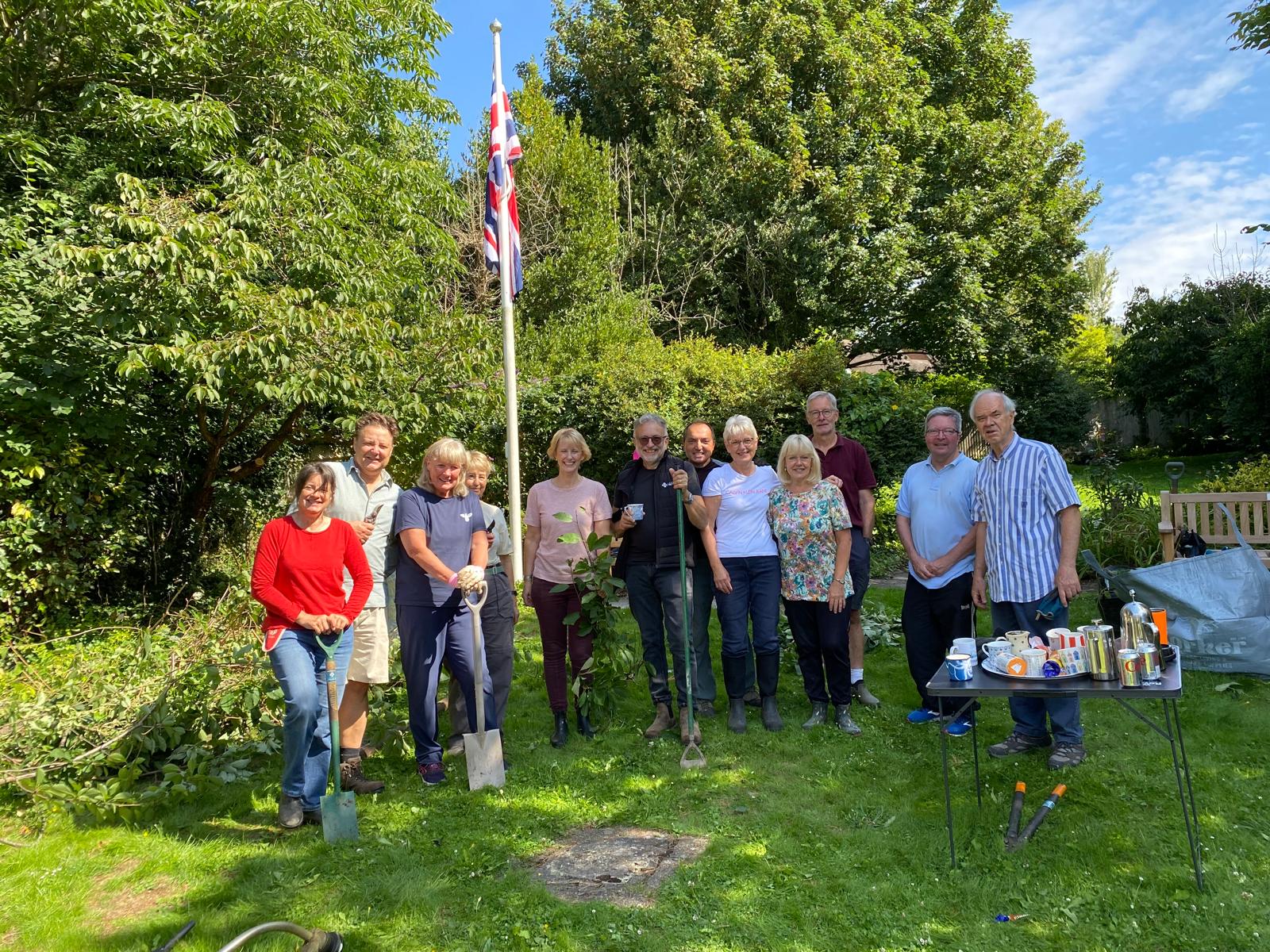
Planting of the new bulbs, shrubs and perennials was completed in November 2025 with water donated from the neighbouring property. To address future needs in a sustainable way as there is no water supply in the garden itself, an IBC water tank was also added, hidden in the top corner of the garden.
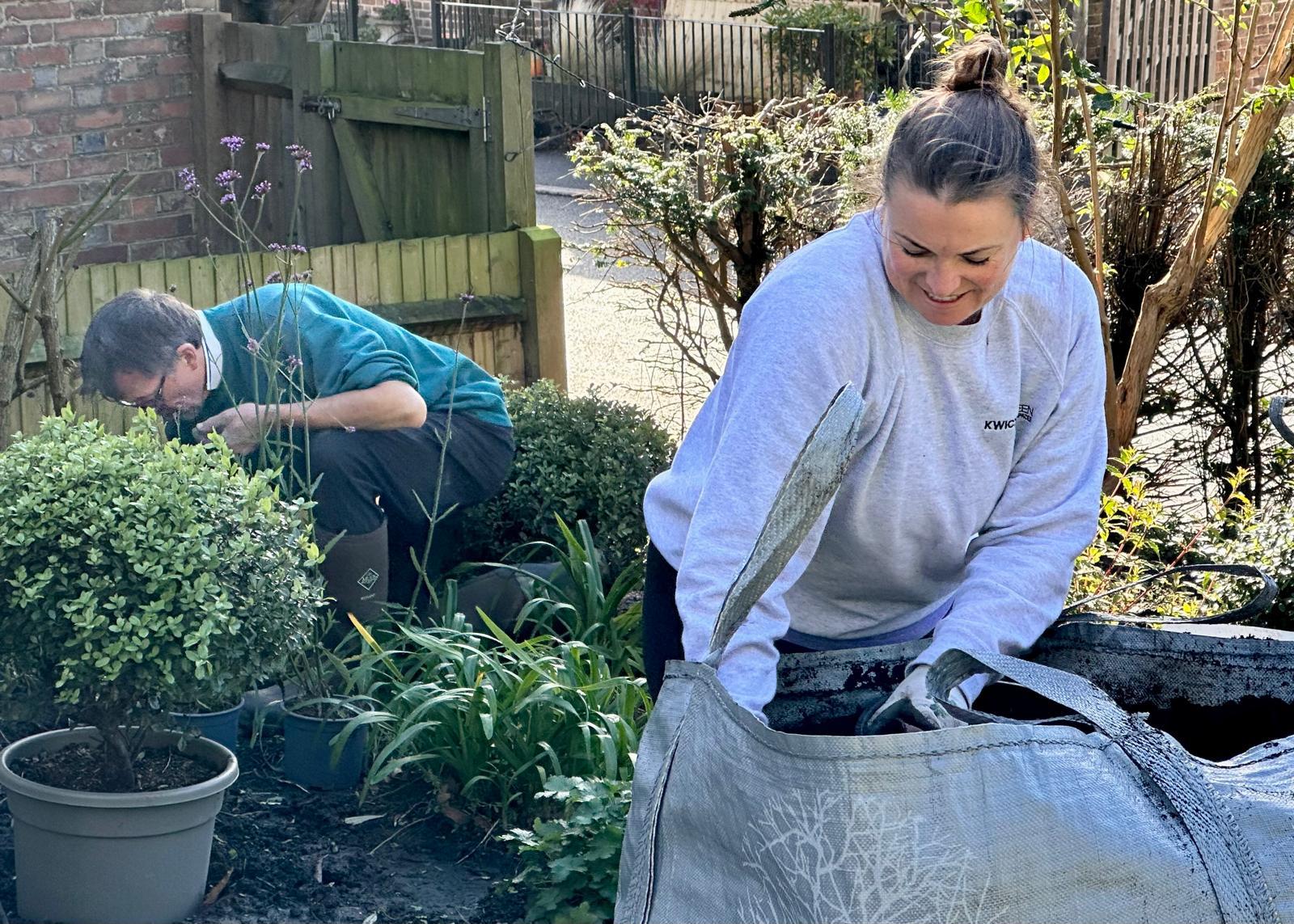
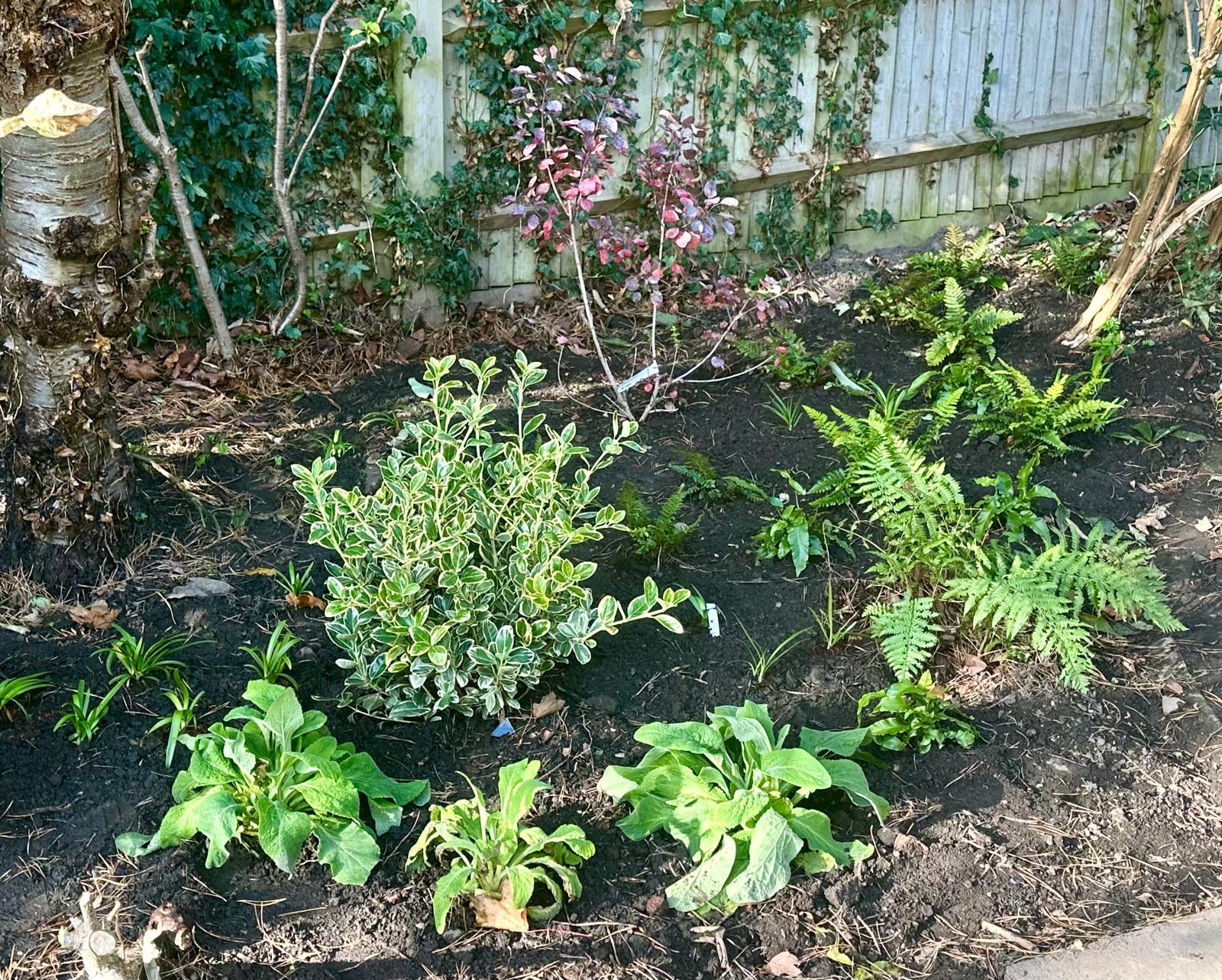
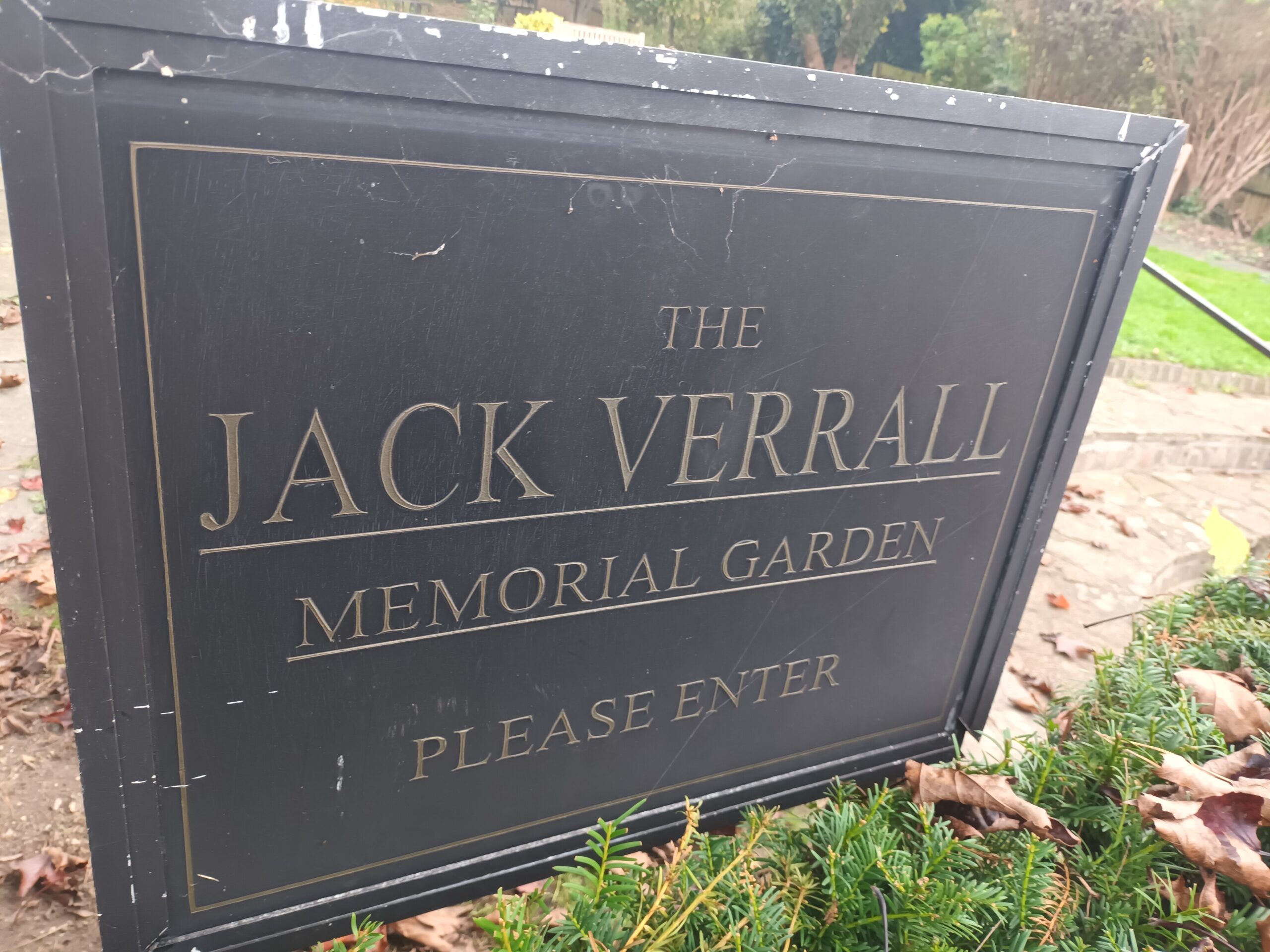
More activities were undertaken in 2026, including more planting, a compost area and the new signage and information board. The Gardens were renamed the Jack Verrall Community Gardens (replacing the word “memorial”) in order to encourage use of them for community activities.
Jack Verrall – the history of the gardens
(The Verrall name originates from the Lindfield area of East Sussex and is usually considered to be a corruption of Fairhall. Variations include Varrall, Verrell etc. (Ronnie Verrell (not known to be a relation) was a famous session drummer who played with the Ted Heath and Jack Parnell orchestras and provided the drumming for Animal in the Muppet show)).
William John (Jack) Verrall was born at Snaggs Well, near Lamberhurst, on the 24th July 1915; he had an older sister, Meg. His father was William Verrall, born in 1884 in Tunbridge Wells, a one-time carter and farm worker. His mother was Ada Leonora Kitchenham, born in 1889 at Bakers Hill, Brenchley (near Tong Farm); she was the third youngest of eighteen children fathered by Harry Kitchenham, also a farm worker. William and Ada married in Brenchley church in November 1910.
The family lived at Snaggs Well until at least 1923 when Jack was photographed at Bayham Abbey. They then moved to Brenchley, living in the house between the butcher’s shop and “The Cut”. Jack went to Brenchley School where he teased Elsie Chantler (“I hate you, Jack Verrall!”). While playing he fell from a tree in Broad Oak, damaging his back, with which he suffered for the rest of his life.
The family moved again into No 10 The Old Palace some time before November 1927, when a garden shed was purchased for £8 5s from W Russell of Markets Heath. Jack had a stormy relationship with his father, a Victorian bully; his mother was the opposite, generous to a fault and deeply religious. As was normal at the time, great use was made of the large garden at No 10 The Old Palace to provide vegetables for the family and Jack grew up with a love of, and great skill in gardening.
On leaving school at 14 Jack worked for his father as a timber feller. William Verrall was sub-contracted to a timber haulage company, providing a team of up to eight local men to fell trees and prepare them for removal by traction engine and trailer. It was well-paid work (about twice the pay of a farm labourer at the time). During the hop picking season Jack’s father managed oast houses, assisted by his son. A younger brother, Bob, was born in 1932.
After an argument with his father, Jack left home and joined the Grenadier Guards in January 1934. He served with the 2nd and 3rd Battalions in London and in Egypt, including public duties at Buckingham Palace, St James Palace and the Bank of England. While in Egypt he boxed for the Battalion and represented it at hockey. He eventually became disillusioned with the army when promised promotion and training courses failed to materialise and his discharge was purchased for £32 in August 1936 by the timber haulage company; he presumably had to repay the money. He returned to forestry work with his father.
While serving in London with the army he met Elsie Chantler again; she was in service with a London family. Her father was in poor health and Jack helped him in the garden at Tibbs Court. They married in Brenchley church on the 19th June 1938, a subdued wedding as her father had died in January of that year. Her family had lived in Holly Cottage at Tibbs Court farm, a cottage named after her father Horace (Holly) Chantler; when her father died they moved to Walnut Tree Cottage (now named Byways). Elsie also had a younger sister, Emily, who served in the WAAF during the war.
When World War 2 started Jack volunteered to rejoin his Guards battalion, but was turned down as his trade was classed as restricted. Forestry workers were required to clear anti-aircraft gun sites and to provide wood for war materials. He therefore spent the first years of the war clearing gun sites in West Kent and East Sussex, often living away from home during the week in a caravan. On more than one occasion the team was machine gunned by German fighter bombers. Jack also joined the local Home Guard. Elsie was required to carry out war work and was employed at Halls in Paddock Wood until she became pregnant; son Michael was born in June 1943. Later in the war, when the forestry work had calmed down, Jack volunteered again, trying to join the RAF as an air gunner. He was turned down again; the German V1 (Doodlebug) campaign had resulted in anti-aircraft guns being moved and new gun sites and barrage balloon positions were required outside London.
Jack met John Archer Dunn, a wealthy American who lived at Owthorpe in Brenchley, while in the Home Guard. The large garden at Owthorpe was described by its owner as “a wilderness” at the time and Jack started to clear and develop it on Saturdays when forestry work allowed. He was an expert gardener by now through a combination of experience and reading.
From February 1946 Jack worked full-time for the Dunn family as head gardener and chauffeur; the Verrall family moved into a house on the Owthorpe estate. Jack’s father died in August 1947, but his mother stayed on at No 10 The Old Palace and Jack looked after the garden for her. Elsie’s sister Emily married Sid Bailey, a returned prisoner of war, in 1945 and they had two sons, Trevor and Richard, but Sid became ill in 1950 and died, leaving Emily in a difficult situation. Emily never re-married and Jack supported her in many ways, providing vegetables and paying for her Sunday joint, throughout much of the rest of his life.
Jack left Owthorpe in October 1950 and was given an excellent reference by John Archer Dunn. The family moved into the White House in Brenchley High Street, next to a saddler’s shop run by Percy Hodges (now the doctors’ surgery). He was employed by the Castle Hill dairy, delivering milk in an electric float, later in a Morris Minor van. When the dairy closed he worked for Godfreys, an agricultural engineering company based in Petteridge. He specialised in operating and demonstrating a Fordson Standard hedge cutter, but also operated other agricultural machinery, assembled silos etc, assisted during school holidays by his son. He worked in Sir William Godfrey’s garden at Thatches at weekends, but that soon became a full time job.
Jack had continued to maintain the garden at No 10 The Old Palace and when his mother moved into the flat next door Jack and his family moved into No 10 which was still owned, at that time, by the Roberts family. When Sir William Godfrey moved to Ireland Jack continued to work part-time in the garden for the new owner at Thatches, but now worked full-time in Bournes Stores, opposite the Old Palace in Brenchley High Street. Fred and Doris Bournes were good employers, taking staff and their families on Summer trips to the seaside and to London shows during the Winter. Jack’s back continued to cause problems and he sought medical advice; he was diagnosed with a slipped disc and was offered surgery, but with a 50% chance of paralysis if the operation failed. He considered the risk to be too great and turned down the offer. He was encased in a plaster jacket from neck to hip level for several months in 1953, but it appeared to make little difference.
The garden at No 10 The Old Palace was by now a combination of colourful flowers near the road with vegetables taking up the remainder of the space. Despite his painful back he expanded the garden into an unused piece of land above his boundary and invested in a heated greenhouse. The vegetable garden produced far more that the family needed and much of the produce was given away. He continued to provide for Emily Bailey and even the chef at the Rose & Crown public house was allowed to help himself to fresh herbs etc.
His next job was at the village butcher’s shop run by Percy Knightsbridge, working in the shop, some butchering, slaughtering animals and making deliveries. He continued with gardening work around the village, taking up most evenings and weekends. When his son joined the army in December 1959 Jack used his local contacts and two of Michael’s references were from Generals who lived in the village, one retired, one still serving.
Jack then worked for the post office, delivering letters. After he died many people came forward and told stories of his help and kindness while a postman, acts of which his family were completely unaware. When a lady’s dog died he returned to her house after work to bury the animal. He posted mail and collected small groceries for elderly people who were house-bound and paid for a local man to visit his son in a London hospital.
When the Old Palace was purchased by the Tunbridge Wells Borough Council Jack and Elsie moved, temporarily, to Sophurst Wood in Matfield while the building was restored. Son Michael married Dawn Lubbock in December 1968. Dawn was a young widow with a three year-old daughter, Karen; Elsie and Jack were now grandparents. Grandson Paul was born in August 1969 and granddaughter Emma was born in December 1973. Jack and Elsie made regular visits to their son’s family in Aldershot, Northern Ireland, Twickenham, West Germany and Dorset.
When Jack left the Post Office he became a full-time gardener, working for a number of people around the village. He finally retired in 1985 aged 70. Elsie and Jack celebrated their Golden Wedding in June 1988 but in October he was admitted to Pembury Hospital and he died on the 28th November, aged 73, with his wife and son beside him. Despite suggestions that she move closer to her son Elsie stayed on in No 10 The Old Palace. The garden was looked after by Richard Bailey and, when possible, by son Michael who had settled in Dorset and was now employed by Dorset County Council. In November 1989 Richard Bailey planted a tree in memory of Jack in Brenchley churchyard and a memorial plaque was placed under the tree in December.
On the 31st January 1993 Elsie was admitted to the Kent and Sussex Hospital in Tunbridge Wells, where she died on the 11th February. Shortly before she died the Tunbridge Wells Borough Council, with no prior warning, fenced off the garden of No 10 The Old Palace, separating it from the house. Fortunately Richard Bailey was in the vicinity and persuaded the workmen to lower the height of the fence in front of the kitchen window. There were plans to build sheltered accommodation on the site, a perceived need following a council survey in consultation with the village population.
It appears that the parish council was keen to keep the garden, however, and to provide an attractive rest area for residents somewhere in the centre of the village. The project was led by Barbara Bambling, Julie Waters and Paul Oliver-Smith. Jack’s son was informed of the project by Richard Bailey and he contacted Paul Oliver-Smith (who, coincidentally, had previously worked as a vet in Dorset, two doors away from where Michael Verrall was now living). An agreement was reached with the borough council and work started on clearing the site and developing the memorial garden. The 1927 garden shed put up a very strong fight but had to go; a Russian vine had, by now, become intertwined within the shed structure. Numerous people provided assistance, including Barry Williams who arranged for his gardener to assist with the work. Robert Henderson and Mary Ovens (the District Nurse) donated seats, the latter dedicated to Elsie Verrall, and the Afternoon Womens’ Institute donated a bird bath. Michael and Caroline Kehoe provided refreshments for the workers from Bournes Stores.
The Jack Verrall Memorial Garden was opened by Councillor Daisy Fletcher, the Deputy Mayor of Tunbridge wells, on the 17th September 1994. An approach had been made to Prince Edward, asking him to open the garden due to the Brenchley link with Sophie Rhys-Jones, but he had another commitment on that day. Present on the day were Jack’s sister Meg with her daughter Jean and her partner, son Robert and his family, and Jack’s son Michael with his wife Dawn and daughter Emma.
Jack Verrall’s nephew Richard Bailey was later awarded the contract to maintain the garden and he did so until he unfortunately died in March 2007. The parish council agreed that, due to the family connection, a seat could be placed in the garden in his memory.
Jack Verrall was a kind and extremely generous man. He wanted for little himself and saw it as his duty only to provide for his family; as a result he had little ambition and was content with his life. His passions in life were gardening and Elsie, and he appeared lost whenever she was not around. Although he worked hard all of his life he never earned a great deal of money, but there was always sufficient and he always had cash in his pocket. Michael never went without anything that he could have reasonably expected while growing up. Later, when eating out, there would always be arguments as to who would pay for the meal, almost turning physical at times; Jack invariably won and the only time his son felt confident of paying for restaurant meals was when Jack visited him in Germany and could not speak the language. When Michael’s family visited Elsie and Jack they would, quite naturally, contribute to their keep. In the car on the way home one of the children would pass the money back to them, having been given it by Jack or Elsie and sworn to secrecy; it would then pass to and fro by post for several weeks.
Jack had numerous stories of his past life and, even today, his granddaughter Emma talks of the stories which he told her when she was little. He loved the grandchildren and was excellent with them; even with his painful back he enthusiastically joined in impromptu games of football with his grandson and friends.